Creative Resilience
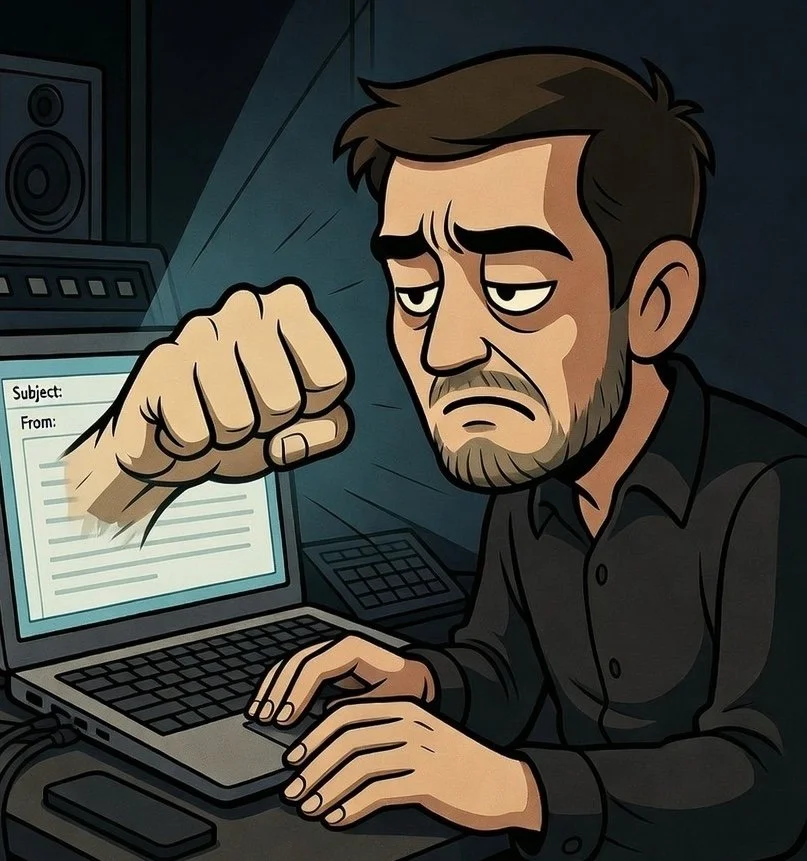
Something I’ve never been good at is receiving feedback, especially bad feedback. Creativity requires vulnerability, and when our work is criticised or rejected, it can hurt far more than we expect. I’ve been producing for over 30 years, so I understand that feedback, or pushback, is a normal part of any collaborative process. And yet, even when it’s diplomatic, polite, and well considered, it can still feel like a dagger to the heart.
If I’m honest, my own tendency to catastrophise only amplifies it. The moment I open an email and see the word “but” in the first couple of sentences, my stomach knots. I brace myself, then anxiously read on, convinced the worst is coming.
The funny thing is, I can’t really imagine a meaningful collaboration without any input from the other person. The idea that I would somehow nail a “perfect” version first time, and be met with only unfiltered praise and awe, is obviously ridiculous. Collaboration, by definition, involves friction.
And if I try to imagine how critical feedback could be delivered without hurting my feelings at all, I come up empty. If it’s sugar-coated, I’d probably find it patronising. If it’s blunt and direct, I’d assume they hated me. There is no perfect phrasing that magically removes the sting.
So the real trick is learning to step back and read feedback as just information. There are many possible reasons behind a client’s response, and almost none of them are personal. Often, we’re working with people who have little or no production experience. They don’t yet have the language to describe what they want, only a feeling or instinct. We can get better at translating those instincts over time, but it will never be a perfect process.
I often tell clients that hypothetical conversations about a future song will only take us so far. The real conversation begins once there is something concrete to listen to and react to. Whether you’re new to the industry or a veteran, testing ideas by doing will always beat theorising. Some of the best tracks I’ve worked on came from unexpected results, happy accidents with sounds or instruments we stumbled across by simply getting started.
It’s also worth remembering that the songwriter or artist who comes to you is often more emotionally invested in the song than you are. Unless you’ve been friends for decades, casually trading ideas for years, how can you expect someone to discuss a deeply personal creative project without it feeling too personal? As the saying goes, “At least buy me dinner first.”
The reality is that collaborative relationships can start out rocky or prickly. That’s normal. So we need our own coping strategies for dealing with the inner voices that want to throw in the towel at the first sign of criticism. From my perspective, those voices never fully disappear. But I’ve learned that they’re mostly paper tigers, loud and intimidating, yet living almost entirely in our own minds.
Feedback isn’t a verdict. It’s just the conversation warming up.